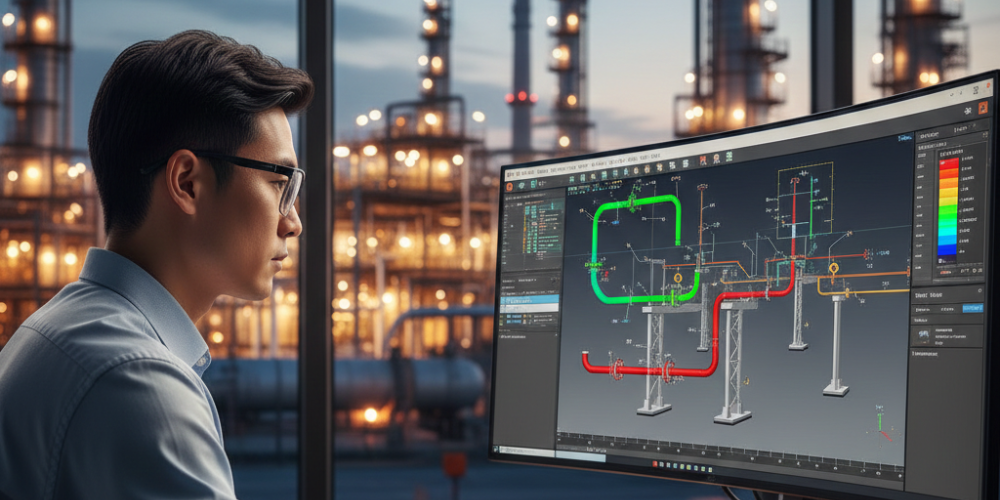
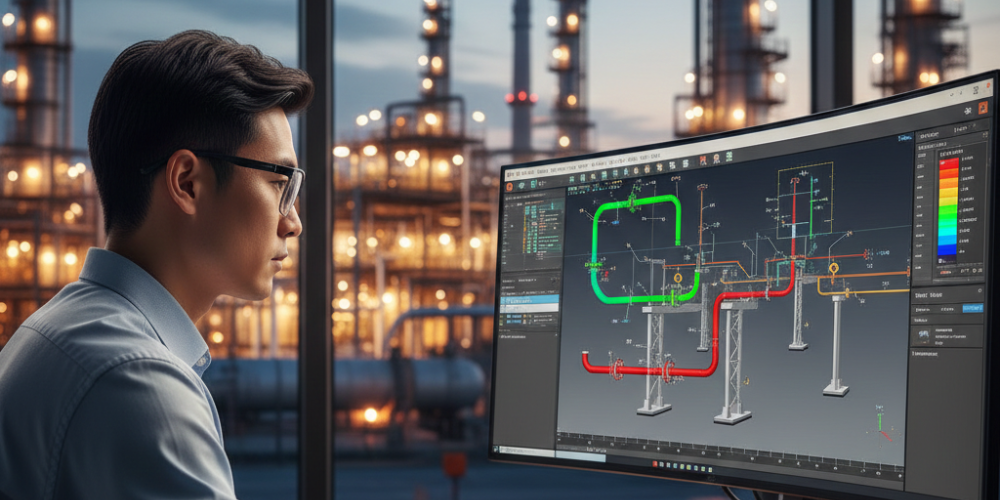
Industrial piping systems operate under extreme conditions such as high temperature, internal pressure, vibration, and external forces. Ensuring that these systems remain safe and compliant is a critical engineering responsibility. This is why piping stress analysis has become an essential part of modern plant design, and CAESAR II is widely recognized as a trusted solution for performing this analysis accurately and efficiently.
What Is Piping Stress Analysis and Why Is It Used
Piping stress analysis is performed to evaluate how piping systems behave under different load conditions, such as thermal expansion, pressure, weight, wind, and seismic forces. CAESAR II enables engineers to identify stress levels, displacement issues, and support reactions before installation, helping to avoid failures and costly shutdowns.
Course Curriculum Overview
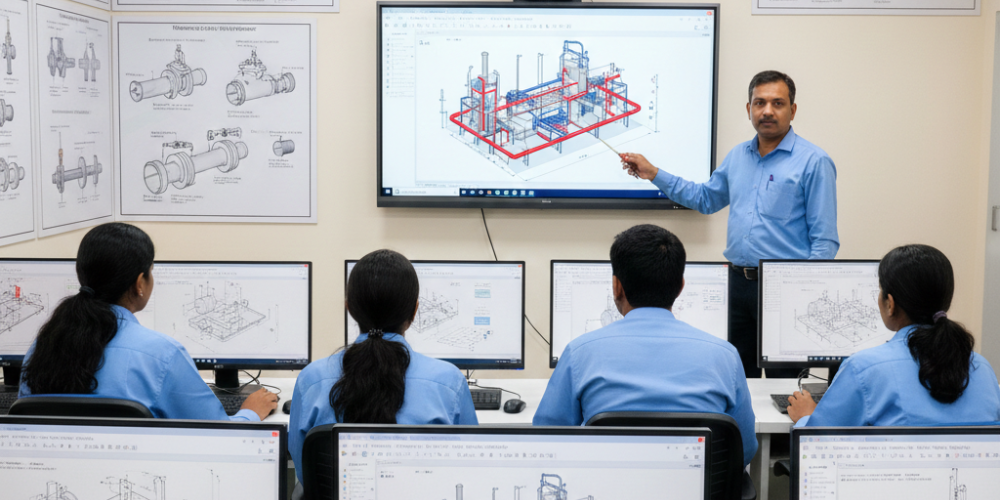
A professional piping stress analysis training program is structured to build strong fundamentals while focusing on practical application. The curriculum typically starts with stress theory, load cases, restraints, and boundary conditions. Learners gain a clear understanding of applicable piping codes such as ASME B31.1 and ASME B31.3, and how stress limits are evaluated.
As the course progresses, students work on real-world piping models, apply operating conditions, and analyze results. Case studies based on industrial scenarios help learners understand how theoretical concepts are applied in actual plant design projects.
Software Skills You Will Learn
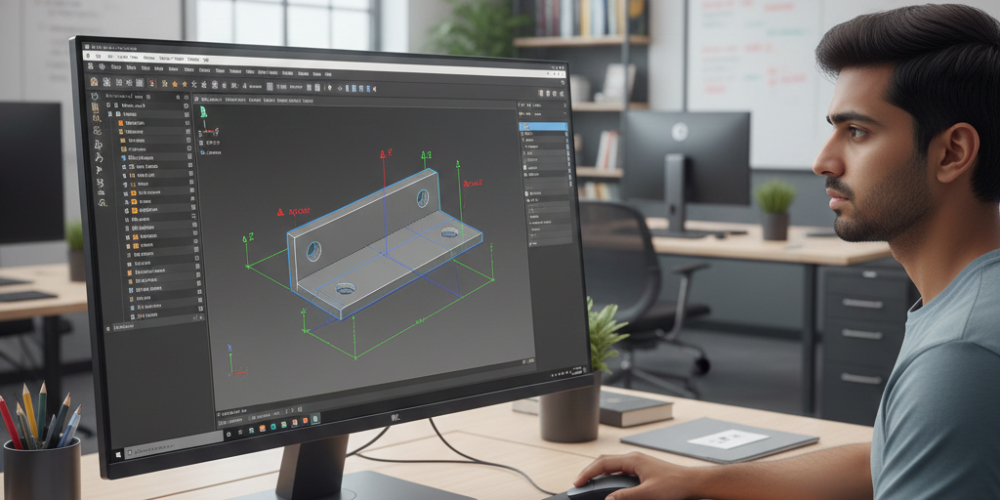
Hands-on learning is a major component of this training. Participants gain practical skills in modeling piping systems, defining materials, temperatures, pressures, and support types. Training also includes evaluating sustained, thermal, and occasional load cases.
Students learn how to read analysis reports, identify overstressed lines, and suggest corrective design measures. These skills are essential for engineers involved in piping design coordination, plant engineering, and stress review activities.
Certification and Training Benefits
- Builds strong expertise in piping stress analysis
- Improves understanding of international piping standards
- Enhances confidence in handling complex plant systems
- Adds professional value through certification
- Improves job readiness for core engineering roles
Career Opportunities After Training Completion
After completing Caesar II training in Mumbai, engineers can pursue roles such as Piping Stress Engineer, Plant Design Engineer, Piping Design Engineer, or Engineering Consultant. Skilled stress analysis professionals are highly valued due to the safety-critical nature of their work.
Upgrade your engineering skills and move into high-demand roles—enroll today and take the next step in your stress analysis career.